Voyager 1 To Reach One Light-Day From Earth: Indian Classical Singer Kesarbai Kerkar's Voice Travels Into Deep Space
· Free Press Journal
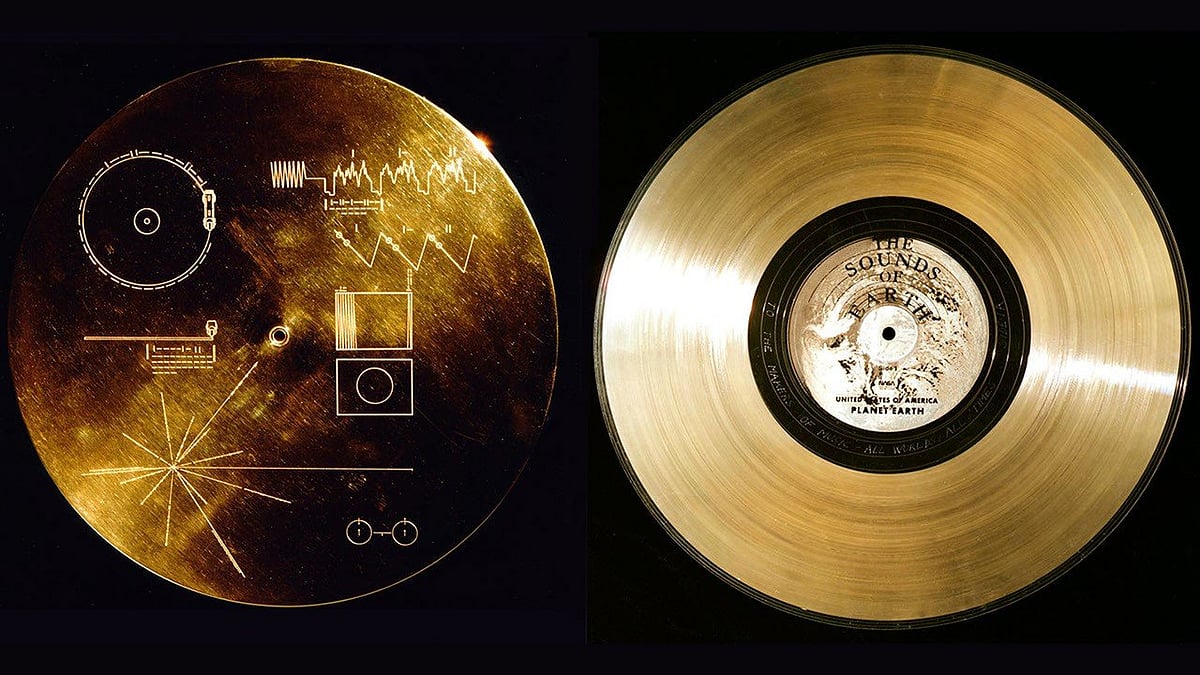
As NASA's Voyager 1 approaches a historic milestone, it is carrying something extraordinary from Earth: the voice of an Indian classical singer who passed away nearly five decades ago. On November 18, 2026, the spacecraft is expected to become the first human-made object to reach a distance of one light-day from Earth, approximately 25.9 billion kilometres away.
At 3:46 pm IST, a radio signal sent from Earth will take 24 hours to reach the spacecraft, with another 24 hours needed for a response to return.
Visit saltysenoritaaz.com for more information.
Among the treasures aboard Voyager 1 is the Golden Record, a 12-inch gold-plated copper disc created as a message for potential extraterrestrial life. It contains 115 images, natural sounds, greetings in 55 languages and 27 musical recordings representing different cultures.
India's contribution to this remarkable collection is a three-minute-and-30-second performance by legendary vocalist Kesarbai Kerkar.
No other traveler has ever journeyed so far from home.
— NASA Solar System (@NASASolarSystem) November 10, 2026
Voyager 1 is about to become the first human-made object to reach a distance of one light-day from Earth, or about 16 billion miles. ½ pic.twitter.com/uETo8DHUF1
Who Is Kesarbai Kerkar, The Indian Singer On Voyager 1?
Born on July 13, 1892, in Keri village in Goa, Kesarbai Kerkar was among the most celebrated Indian classical vocalists of her generation. A distinguished exponent of the Jaipur-Atrauli gharana, she trained under its founder, Ustad Alladiya Khan.
Her recording of Jaat Kahan Ho, performed in raga Bhairavi, was selected for the Golden Record. The song's title translates to 'Where are you going?', making its journey into the unknown particularly meaningful.
American ethnomusicologist Robert E Brown, who helped curate the musical selections, described her Bhairavi performance as the "finest recorded example of Indian classical music."
Today I learnt: Indian classical singer Kesarbai Kerkar's Bhairavi has travelled 23 billion kms on the @NASAVoyager, part of the Golden Record of our planet's science, sounds, and images for other galaxies. Her voice will outlive our world and our every legacy by centuries. pic.twitter.com/hSREqJ6IAn
— Nabila Jamshed (@NabilaJamshed) July 30, 2020
The Singer Who Disliked Recording Her Music
Interestingly, Kerkar was not particularly comfortable with recording technology. Music writer Susheela Misra described her as "allergic to broadcasting." She was also reluctant to record long-playing albums and reportedly refused to return to the HMV studio after disagreements over re-recording older tracks.
Yet, her voice eventually travelled farther than any other Indian musical performance, carried aboard a spacecraft moving through interstellar space.
Kerkar died on September 16, 1977, just 11 days after Voyager 1 was launched.
Hi and Goodbye, Voyager 1 ️
— 360 Bazaar (@360Bazaar) November 18, 2026
After nearly 50 years in space, @NASA’s Voyager 1 is officially one light-day away from Earth—the farthest any human-made object has ever traveled.
Carrying Kesarbai Kerkar’s "Jaat Kahan Ho" on its Golden Record into the unknown. pic.twitter.com/JMcl39kuey
India's 10 Languages On The Golden Record
Beyond music, the Golden Record also features greetings in ten Indian languages, including Hindi, Bengali, Marathi, Gujarati, Kannada, Telugu, Punjabi, Urdu, Oriya and Rajasthani.
The messages include a greeting from Earth's inhabitants and a wish from the Rajasthani speaker: "We are happy here and you be happy there."
Physicist Bishun Khare of Cornell University played a crucial role in bringing Indian voices into the project by approaching members of the Indian community and inviting them to participate.
Where Is Voyager 1 Headed?
Voyager 1 does not broadcast the Golden Record; it simply carries it as a time capsule of humanity. NASA estimates that it will pass within 1.7 light-years of the star Gliese 445 in approximately 40,000 years.
Whether another civilisation will ever discover the disc remains unknown. But somewhere in the vastness of space, an Indian classical singer's voice continues its extraordinary journey.
Level up your brain the fun way. Play daily games and quizzes on FPJ Smart!