When Writers Lose Faith in Free Speech
· The Atlantic
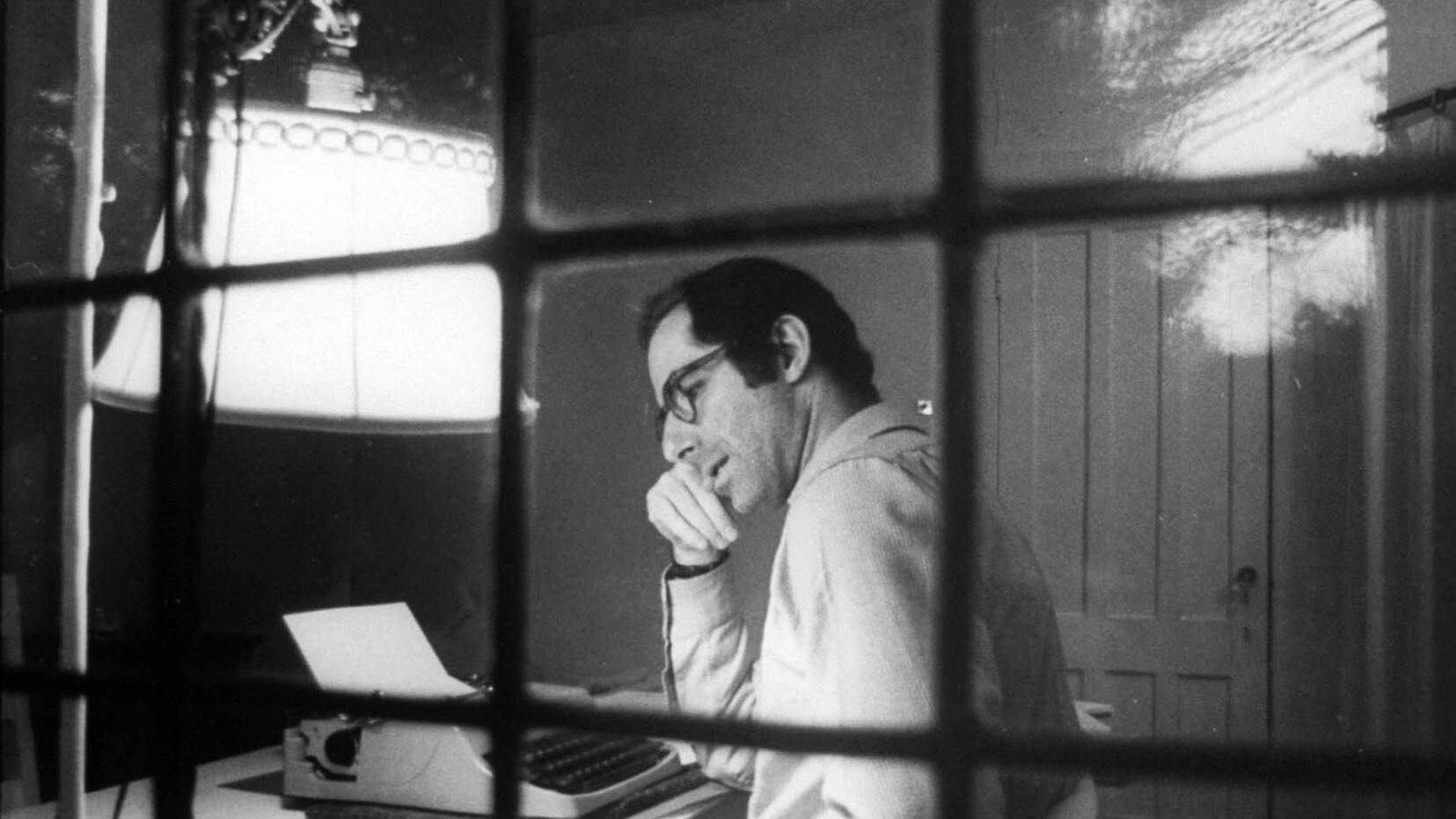
On Thursday, the Atlantic staff writer George Packer delivered the Newark Public Library’s annual Philip Roth Lecture. This article is adapted from his remarks.
Visit fish-roadgame.com for more information.
Philip Roth’s chosen vocation was the novel, and he practiced it almost nonstop for six decades with a monkish devotion. In his hands it became a thing of explosive invention, wildly comical and intensely serious. The critic Lionel Trilling wrote: “The most effective agent of the moral imagination has been the novel of the last two hundred years.” Roth’s readiness to experiment and provoke expanded his readers’ moral imagination—their ability to see beyond the appearances of their lives to the deeper reality.
The reign of the novel has coincided with the centuries of democracy. I don’t think this is a complete coincidence, because no other literary form has such plasticity and variety; no other genre is so concerned with the moral struggles of individuals amid the social forces that constrict or enlarge their humanity. If democracy is the political system that allows the fullest human flourishing, the novel is the literary form that most fully cultivates our understanding of human possibility and tragedy and endurance.
In 1959, 25-year-old Roth published a short story called “Defender of the Faith” in The New Yorker, just ahead of its inclusion in his first book, Goodbye, Columbus. Some Jewish readers strongly objected to the story’s caustic portrayal of a Jewish character. This was the start of Roth’s career-long embattlement with critics high and low. A certain Rabbi Emanuel Rackman, the president of the Rabbinical Council of America, complained to the Anti-Defamation League: “What is being done to silence this man? Medieval Jews would have known what to do with him.” Young Roth shot off a letter to Rackman: “He who criticizes must be silenced—that is a terrible tenet to have to live by, Rabbi, and I should imagine even more terrible to a spiritual leader.”
Writers work in the creative tension between freedom and attachment. They have to maintain an inner distance from external demands, including the demands of politics; at the same time, they aren’t excused from the responsibilities of being a human and a citizen. They need to be left alone, but they can’t escape the world. Much of Roth’s work conveys the tug of this social awareness, even or especially in revolt against the duties it imposes. He was also fierce on behalf of freedom, and not only his own. He edited Writers From the Other Europe so that work by Milan Kundera and other Eastern Europeans could bypass the Communist censors and be made widely available to English-speaking readers. When the Iranian regime sentenced Salman Rushdie to death, Roth had him to dinner at his London flat, accompanied by half a dozen security officers. Perhaps because Roth’s own need to write was an unstoppable, nearly biological drive, any attempt to silence a writer awakened his primal rage—and woe unto the Rabbi Rackmans of the world.
When it comes to threats to free expression, we usually think of government censorship. The current occupant of the White House, more than any president in my lifetime, is trying his best to be the grand inquisitor. He’s carried on a relentless campaign of legal actions and verbal attacks against journalists, broadcasters, comedians, immigrants with unpopular views, and just about anyone who criticizes him. His administration has allowed major media organizations to be bought up by his cronies and merged into near-monopolies. His executive orders have barred hundreds of words from official use. His Pentagon purged 381 books from the Naval Academy library, including Henry James and Sexuality (surprisingly popular with midshipmen).
We expect governments to try to restrict speech. It isn’t in the nature of power to let offending views go undisturbed. For the past decade, we in the West have been preoccupied with the divisive effects of the propaganda and lies that free people avidly consume on social media. But reporting in countries such as Ethiopia, Afghanistan, and Myanmar always reminds me that old-fashioned repression didn’t end with the 20th century. Publishing a poem or story can still bring the risk of jail or worse. The threat comes from police and vigilantes, and the red lines are kept dangerously unclear. Burmese poets invent an elaborately coded language of metaphors to get their social criticism past official censors who scrutinize every word. I’ve never heard the case for literary freedom so passionately made as in the rain-soaked streets of Rangoon.
[From the April 2021 issue: The relentless Philip Roth]
Fortunately, in our country we have a First Amendment, and not even this American president can throw us in prison for what we say and write and read. But free speech depends on more than the law. It needs a culture of free expression—a set of widely shared habits and expectations that guide daily life, an ability to tolerate disagreement, a willingness to listen even, or especially, when we don’t like what we hear. The First Amendment stands there like a block of stone against the efforts of would-be government censors, but a culture of free expression is a delicate thing that has to be trained and tended. It can bloom and fade. It lives or dies in the inner recesses of our minds, releasing or smothering thoughts and words regardless of the protections of the First Amendment. In a late essay, George Orwell wrote, “If large numbers of people are interested in freedom of speech, there will be freedom of speech, even if the law forbids it; if public opinion is sluggish, inconvenient minorities will be persecuted, even if laws exist to protect them.”
In other words, a culture of free expression is up to us. I want to explore why ours seems particularly weak. One of the reasons is coming from inside the house.
If Roth were still with us at 93, he would find that the censorious rabbis, commissars, and mullahs have become writers. This is a time of promiscuous boycotts, rampant deplatformings and depublishings—books removed from store shelves, canceled before publication, withdrawn from sale as if we had gone back to the age of medieval heresy-hunting. Except now, instead of being hoisted by the strappado or bound to the rack, heretics are disinvited from conferences and review-bombed on Goodreads.
I’ve had a front-row seat at this literary auto-da-fé—and I admit that my close-up vantage might distort my view a little. Shortly after October 7, 2023, I joined the board of the century-old free-speech writers’ organization PEN America. My timing was perfect: A pressure campaign by well-known writers had just begun against PEN and its leader for their insufficient zeal in condemning the war in Gaza. When, rightly or wrongly, PEN failed to say what its critics wanted to hear, they launched an aggressive boycott of the organization’s two premier events, its literary-awards ceremony and literary festival. Because I was new, it took me a little while to realize that the purpose of the boycott wasn’t to push PEN into a dialogue or allow writers to make their views known. The purpose was to flex enough cultural power to force the cancellation of the events; if possible, to destroy PEN America. The boycott achieved the first goal and nearly achieved the second.
I also learned that a successful campaign doesn’t depend on broad ideological agreement. A few true believers can build up a critical mass of support by applying heavy pressure through networks of friends and professional connections—convincing them that refusing to join would be morally wrong, or just not worth the trouble it would cause them—and recruiting enough joiners that the remaining holdouts are isolated and risk social censure. Under this pressure, a well-known writer called me to ask whether he should drop out of the PEN festival. He was worried about optics—because of the boycott, his panel might be down to a couple of white writers. Call me naive, but I still thought of writers as fairly independent-minded people who didn’t like to obey what D. H. Lawrence called their “mob self,” who were unwilling to be coerced by the crowd, ornery when it came down to the right to speak and hear, even a bit vain when given the chance to stand on their own. I urged my friend to stay on—but as we hung up, I could tell which way the wind would blow him.
Each big-name departure generated others, until the exodus became a stampede and the events were finally canceled because of lack of participants. This sad experience was a revelation: Writers turn out to be just as susceptible to peer pressure and social stigma as other people—maybe more so. PEN America survived, barely.
With new leadership, the organization went through another, related crisis. The trigger was again the Middle East. Last year, PEN published a long, detailed report on the cultural destruction of Gaza by Israel: the heritage sites, museums, libraries, and universities wiped out; the hundreds of journalists, writers, and artists killed. Then, this past summer, the organization published another document: This one dealt with the growing exclusion of Israeli, and even some Jewish American, writers from literary life. The piece didn’t try to prove a coordinated campaign of discrimination, but it described a hostile climate in which editors are reluctant to sign or even read work submitted by these writers and their agents, novelists are told to downplay Jewish characters and themes, and bookstores and festivals vet these writers for signs of “wrongthink.” The Pulitzer Prize–winning biographer Benjamin Moser exulted to The Wall Street Journal: “Zionism is out of fashion in the publishing world, and it’s not ever going to be in fashion again.”
None of this is surprising. After all, more than 7,000 literary professionals have signed on to a global boycott of Israeli cultural institutions, including of individual writers and publishers who don’t adequately affirm their support for the Palestinian cause. It would have to be a pretty incompetent boycott not to create a chill.
These two documents—one on cultural destruction in Gaza, the other on the exclusion of Israeli and Jewish writers—demonstrate why we need a group that’s committed to free expression regardless of political pressure. I don’t know of another organization that has done this work in showing the effects of this terrible war on culture across the lines of conflict. And yet, strangely enough, PEN America has become a pariah to many writers. The Gaza report didn’t get much attention; perhaps PEN’s boycotters already had what they wanted. But when the second piece appeared, it lit a small conflagration.
PEN’s new board president, a novelist, immediately resigned. Several board members followed him out. The now-ex-president began to denounce the organization, saying that it should never have published the piece and calling it “unethical.” His complaint was that the document would harm the Israel boycott by giving ammunition to its critics, including American politicians who have sought to ban it as discriminatory. I’m opposed to laws that criminalize boycotts, but I’m also against suppressing the truth just because it might hurt a cause I support. The ex-president argued that a cultural boycott is a form of protected speech—and it is. But let’s not kid ourselves: Its purpose is to ostracize and ultimately silence disfavored writers. It is incompatible with a culture of free expression.
[From the May 2020 issue: Philip Roth’s terrible gift of intimacy]
So this is where we are: The leader of a free-speech writers’ group quit because it defended the free speech of writers. A number of confused friends called to ask me what the hell was happening. I did my best to explain, but honestly, by now I wasn’t surprised. This was no longer a man-bites-dog story. To PEN’s ex-president and others like him, literary freedom was never the real concern. What mattered was whether PEN helped or harmed their political cause. I’ve learned the hard way that writers can’t always be counted on to support the freedom of other writers—that sometimes they’re the last people to count on. The principle that makes their life’s work even possible no longer seems to carry the force of belief. The question is: Why?
The answer has something to do with politics—with an idea about the role of the writer in politics, and the role of politics in writing. We live in an intensely political time, and unless you’re making a huge effort to ignore the world around you, your mind is saturated with existential elections, partisan hatreds, historic corruption, wars and war crimes, global apocalypses, and the poisonous nature of the very information you’re consuming. The future of democracy and maybe humanity is at stake every day. It’s natural for conscious people to speak out, and writers especially feel they have an important role to play. At least since Zola defended Dreyfus, in times of crisis, writers have given their names to political causes and tried to move others to do the same. They feel that their work is an expression of their moral values, and they want to put that status to more direct use than sitting all alone in the cloudy realm of truth and beauty.
Politics today seeps into everything, from pet-food choices to tampon brands. At the same time, literature is at risk of disappearing—or at least becoming the eccentric taste of a small elite, like opera. Philip Roth anticipated this back in 2004, when he said, “I don’t think in 20 or 25 years anyone will read these things at all. I think there are other things for people to do, other ways for them to be occupied, other ways for them to be imaginatively engaged, that are I think probably far more compelling than the novel, so I think the novel’s day has come and gone.” Right on time, we’re now told that we are becoming a “postliterate society,” we are entering “the new Dark Ages,” we have reached “the end of reading.” The percentage of Americans who still read at least one book annually has become as familiar an indicator of national decline as the Gini coefficient of economic inequality, or the life expectancy of non-college-educated white people.
So one reason some writers feel justified in silencing others for political reasons might be the declining value of writing itself. Politics has never seemed more urgent, while literature has never seemed more marginal. If I can strike a blow for human rights and justice by shutting down a writer whose country is waging a brutal war, why would I let an abstraction stop me? (And I won’t pause to ask what good I’m really doing, other than for my own moral hygiene.)
For example, the Pulitzer-winning New York Times columnist M. Gessen criticized the PEN piece on Facebook, essentially saying that its findings about Israeli and Jewish writers are exaggerated, irrelevant, or untrue—and if they are true, all the better. Gessen argued that no one would expect the writings of Heinrich Böll to have been published while he was a German soldier during World War II, or the work of a Russian writer who’s silent about the war in Ukraine to be made available in the West. Shouldn’t the same go for Israeli writers while Palestinians are being killed in Gaza and the West Bank?
I won’t get into the business of weighing the Holocaust, Ukraine, and Gaza on the scales of historic crimes. What interests me is the role of literature at such a moment. An Israeli writer named Mikhal Dekel, replying to Gessen, spoke about the need to make room for writing that doesn’t fall into clear ideological categories—that might use an indirect or ironic style. Dekel herself is writing a book about the complex lives of Arabs and Jews who reside in the same building in Haifa. She invoked the South African novelist J. M. Coetzee, who was criticized for not taking public positions on behalf of the anti-apartheid movement, but whose novels, both realistic and allegorical, brilliantly portray the psychology of oppression.
Gessen’s answer got to the point: “Now may not be the time for such literature. Not while the genocide is continuing and while the majority of people with those complex predicaments support it and tolerate it … Now, I think, is a time for laying down basic moral coordinates. The time when readers outside of Israel are ready to start filling in the many shades and colors of the grid will come later.”
When the time comes, presumably Gessen will let us know. But while we wait, it’s worth thinking about the phrase “laying down basic moral coordinates.” It seems to describe writing that takes a clear position and compels a simple response. I believe that there’s a place for such literature. We shouldn’t make a fetish of ambiguity and disinterestedness that would oblige us to cancel Hard Times and The Grapes of Wrath. When James Baldwin attacks Richard Wright for writing a protest novel that denies the humanity of its protagonist, I nod along—but I would much rather reread Native Son than Giovanni’s Room. The intensity of Wright’s vision of injustice makes the crudeness of his characterization less important. There’s value in a literature that compels its own time to see the truth about itself. No one can doubt where Darkness at Noon and 1984 stand on totalitarianism.
Yet Gessen’s “basic moral coordinates” make me uneasy—and not just because they’re offered as grounds for excluding certain writers. Something about the exhortation puts me on edge. It feels like the pressure of a hand on my back, gently but firmly pushing me toward foregone conclusions and absolute truths, when in fact the place where politics and literature meet is fraught with risk. Trilling called this place “the dark and bloody crossroads.” A lot of bad politics and bad books are buried there, or else emerged from the encounter damaged and diminished. At this intersection, politics often becomes what it rarely is or can be, a simple contest between right and wrong, while literature approaches a form of propaganda that makes artistic integrity impossible by requiring distortions and lies.
[From the April 2012 issue: Roth v. Roth v. Roth]
Entering the zone of politics seems to give writers a license to forget everything they ever knew about human complexity. Politics is the one place where life can be the morality tale that they’d never accept in a work of art. Social reality is reduced to an open letter with all of the right signatories, written in a tone of high righteousness—politics as an extension of personal conscience: “Here I stand. I can do no other.” The really dangerous temptation is to become a prophet—once writers let that happen, they stop being writers. Thomas Mann, who in his later years became a tireless public speaker for democracy and against fascism, was aware of the danger: “The political moralizings of an artist have undeniably something comic about them. Moreover his propaganda for humanitarian ideals must inevitably bring him closer than close to the platitudinous.”
And when politics enters a literary work, the result can be just as painful. Stendhal compared it to “a pistol shot in the middle of a concert, something loud and vulgar, and yet a thing to which it is not possible to refuse one’s attention.” Sometimes, a political agenda is slathered on top of an otherwise unrelated story like a coat of high-gloss paint. Or else characters are manipulated like ventriloquist dummies to dramatize a writer’s views, usually at the expense of their credibility. The critic Becca Rothfeld coined the term sanctimony literature to describe a wave of popular contemporary novels whose protagonists are represented as good people because they espouse the right progressive views in between couplings and breakups. The politics is already settled, with no conflicts in the quest for goodness, only a smooth convergence of opinion among authors, characters, and readers: frictionless fiction.
If the book world were predominantly conservative, sanctimony literature would present very different views. But that’s almost inconceivable. We’ve had groups called “Hispanics for Trump,” “Blacks for Trump,” and even “Arab Americans for Trump,” but I have serious trouble imagining “Poets, Essayists, and Novelists for Trump.” It’s even hard to think of a living American writer who could be a registered Republican—Cormac McCarthy might have been the last. It’s a sign of the saturation of culture by politics that the book world is so uniformly on the left.
Perhaps there’s a progressive bias to literature itself: an openness to new varieties of experience, an impulse to criticize the existing social order. Yet other times and places had their conservative and reactionary writers—critics of liberal democracy, skeptics of progress and equality: Dostoyevsky, Conrad, Eliot, Pound, Céline, Hurston, O’Connor. Maybe we should congratulate ourselves on having no prize-winning fascist poets. But in the 1940s, another period when literature came under the domination of politics, Trilling warned: “We have the books that point out the bad conditions, that praise us for taking progressive attitudes. We have no books that raise questions in our minds not only about conditions but about ourselves, that lead us to refine our motives and ask what might lie behind our good impulses.”
When literature applies no pressure to a general conformity, we read to be flattered and lose a crucial tool in understanding reality, including the murky nature of our deepest beliefs. Literary judgments merge with political ones until they’re indistinguishable. It ought to be possible to say: “This writer speaks for me—too bad he’s a terrible writer.” But readers, including professional critics, are more likely to assess the merits of a book before they’ve opened it. A judge for a prestigious prize once told me with evident pride that his committee had decided not to honor the book they thought was actually the best, but the one they thought was most politically relevant to the moment. Some literary prizes are so aligned with current orthodoxy that every few years, the winners reliably change with the political fashions.
I think this confusion of categories shows a waning faith in both politics and literature. Politics becomes a set of positions and slogans, not a public square where individuals encounter one another in a common enterprise, ideas and interests clash, and no one comes out completely clean. Literature becomes a demonstration of goodness, not the art form in which our humanity can be most fully explored.
The point is not to keep literature and politics separate. That would be not just impossible but undesirable—in fact, unthinkable. We would lose, among so much more, the Philip Roth of The Plot Against America. Politics is the business of everyone, including writers. Their work can be done only in an artistic freedom that needs political freedom to flourish. They have to balance the inner solitude of art with a nourishing connection to the outside world. Nothing about their vocation equips them any better than other people to answer the hardest questions confronting humanity—but neither are writers excused from the responsibility to face them. “A writer should not provide solutions,” Chekhov said, “but describe a situation so truthfully that the reader can no longer evade it.”
Sensitive readers know when the authorial thumb is on the scale—when they’re being recruited and flattered rather than enlightened and provoked. Filling in what Gessen calls “the many shades and colors of the grid” should be the aspiration of any literature worth the name. If Roth had written American Pastoral to lay down some basic moral coordinates, this tale of a decent, successful Jewish businessman whose precocious daughter becomes a 1960s revolutionary and blows up their lives would pander to the complacency of a conservative Jewish reader. In fact, Norman Podhoretz loved it, while missing the point. Roth’s masterpiece expresses all his ambivalence about assimilation and rebellion; in the end, there are no ideological winners, only the “massive historical pain” that the “indigenous American berserk” inflicts on the novel’s uncomprehending hero.
The novelist’s job is to bring abstract ideology into sustained contact with concrete experience. There, a mysterious transformation takes place; ideas never keep their pristine shape as they undergo the heat of human passions. Writers and readers are brought into a communion that’s higher than political opinion and, as Irving Howe wrote in his classic Politics and the Novel, “find some common recognition, some supervening human bond above and beyond ideas.”
Why should all of this matter to us now?
The world’s richest and most powerful men want to hustle us into a post-human age of history. They anticipate that our ability in relation to superintelligence will be about the same as that of chimpanzees is to us. Elon Musk recently predicted that in five years, “There really won’t be anything that AI can’t do better than humans, apart from being human perhaps.” The dismissive shrug of that perhaps! Musk makes being human sound like an afterthought, hardly worth mentioning. In the future, and soon, there will be something shameful and humiliating about it, stuck as we’ll be with our decaying bodies and primitive brains, struggling to put a few good sentences together, while machines fed with every human word ever written spit out perfect novels in a matter of seconds. We’ll have returned to the opening scene of 2001: A Space Odyssey, where shaggy hominids chatter moronically at the base of an inscrutable monolith.
[From the April 1969 issue: The journey of Philip Roth]
I haven’t read an AI novel and hope I never will, though it might happen without my knowing. After all, artificial novels have won major literary prizes, before researchers discovered the fraud through the detector Pangram, which is becoming a kind of literary Patriot-missile system, our only defense against the onslaught of machine literature. It’s also possible that 100 percent human-written texts will start to sound more like generative AI. Large language models are trained on our work, but the flow of instruction could be reversed, the way that algorithms dictate how we sound on social-media platforms where we think we’re free to sound like ourselves.
The more that our writing is done through AI, the more reductive and predictable and cloying it will become, like a robot lover in book form. It might not spell the end of literature, but it will probably mean the end of the kind of literature we’ve known throughout the democratic centuries—the work of a free individual mind. And if writing serves as the valet to a domineering politics that decides which ideas and writers are allowed into the house of literature—if writers lose faith in the principle that makes their work possible just when it stands to be swept aside by a trillion-dollar industry—then the whole thing might as well be done by machine, and probably will be. With the right prompts, AI will surely excel at laying down basic moral coordinates.
But if the creation of stories and the communication of ideas through language remain activities that differentiate us from computers and chimps, then literature will be one of the last barriers against surrendering our humanity to the million-headed god of superintelligence. If books written by human beings are to survive the hyper-politicization of this age and the artificiality of the next, it will be because this work does something special, something we want and need and can’t get anywhere else. On the verge of the singularity, we must cherish our words and the freedom to write them as flickers of that absurd and precious thing: human dignity.