An ‘America First’ Approach to Famine
· The Atlantic
In 1967, two former State Department employees, William and Paul Paddock, argued that the U.S. government should reject a popular new idea about how a great nation ought to exercise power. Earth, the brothers predicted in their best-selling book, Famine—1975!, would soon be suffering through unrelenting, continent-spanning hunger, and the countries that grew wheat would be the most powerful. In this world order, the United States could be as great as Athens or Byzantium—if the government could let go of what the Paddocks called “this brand-new obligation to feed the world’s hungry.”
Visit arroznegro.club for more information.
The brothers’ projections, luckily, turned out to be exceptionally wrong. In the decades since, the global population has doubled, and catastrophic famines have become far rarer because of agricultural innovations and a will among world leaders to prevent mass starvation. The Famine Early Warning Systems Network, created by President Ronald Reagan’s administration, can forecast hunger emergencies months in advance; whenever FEWS Net has assessed a credible risk of famine, Republican and Democratic presidents alike have sent food and basic medicines overseas to try to minimize deaths.
Right now, that system is warning about the rising possibility of famine in Somalia. And for the first time since the 1980s, the U.S. government, faced with this kind of disaster, has done nothing and apparently plans to continue doing nothing.
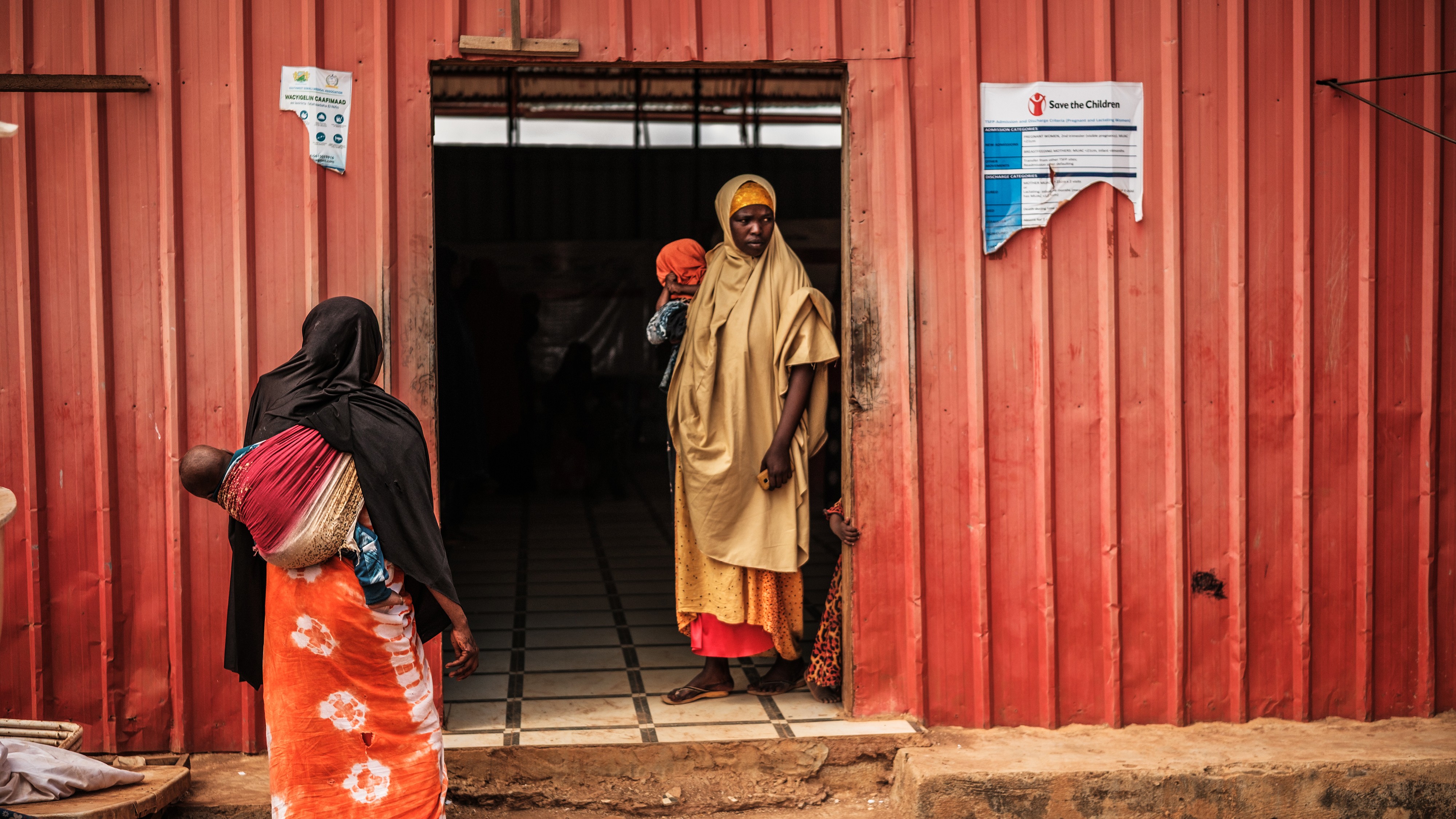
In Somalia, back-to-back droughts that began last year have killed more than 1 million livestock. Somalis—most of whom are goat, sheep, and camel herders—can’t expect help from their government, which is corrupt and devotes most of its small budget to fighting al-Shabaab, al-Qaeda’s Somali affiliate. The terrorist group controls a third of the country, including land along rivers, where it has allowed major irrigation projects to fall into disrepair. Throughout Somalia, international assistance is newly scarce or nonexistent. Half a million children now have severe acute malnutrition, the last stage of hunger before death, when organs start failing and irreversible brain damage typically occurs. And Somalia’s emergency-management agency predicts that, thanks in large part to the Super El Niño, the coming months may bring the worst flash floods the country has seen this century. Floodwaters could drown crops and animals, and make it much harder for the humanitarian workers who remain in Somalia to reach the tens of thousands of people living in displacement camps, some of whom would likely begin starving to death.
Back in May, FEWS Net started indicating a credible risk that famine could occur in certain regions of Somalia by the end of this year. This designation is meant to buy the international community time to prevent deaths, and the U.S. has historically acted on it, even when the people who are threatened live in nations hostile to America. During the first Trump administration, the U.S. sent millions of dollars’ worth of food to Yemen—a country that is partly ruled by a terrorist group whose motto includes the phrase “Death to America”—after FEWS Net warned about the potential for a famine there. The peak of humanitarian funding to Somalia came in 2022, when the Biden administration (with Congress’s approval) spent more than $2 billion to prevent a catastrophic famine that FEWS Net said was possible. Researchers later estimated that American aid alone saved about 3 million lives across East Africa.
This fiscal year, despite a similarly dire forecast, the U.S. is allocating zero dollars. In recent years, the U.S. sent an average of $450 million in aid to Somalia. In 2025, President Trump sent a quarter of that amount. In January, the State Department announced in a social-media post that it was pausing all foreign assistance to Somalia, alleging that the country had wasted American resources. (This pause is separate from the severe reduction in funding that resulted from the dissolution of USAID in early 2025.) Even after the FEWS Net warning, the pause remains in effect.
The Trump administration has said that it paused funding because in January, the Somali government, while in the process of redeveloping a port area, had destroyed a warehouse that contained 83 tons of fortified foods partly paid for by the United States. (The World Food Program’s second in command, Carl Skau, told me that the organization ultimately recovered all of the food.) “The Trump Administration maintains a firm zero tolerance policy for waste, theft, or diversion of U.S. resources,” a State Department spokesperson told me in an email. But the decision may have been in the works weeks before that demolition. In November of last year, the State Department was considering distributing foreign assistance to Somalia, according to an internal document that I reviewed. A plan was drawn up, then, abruptly, on December 1, a senior State Department leader informed people who had worked on it that they should instead prepare for no funds to be sent at all, according to the document.
What changed? No official reason was given at the time; the spokesperson told me only that foreign assistance is continually evaluated to ensure it is advancing U.S. interests. But the department dropped work on the plan just after The New York Times published an investigation that found Medicaid fraud orchestrated by dozens of members of Minnesota’s Somali diaspora. In the days that followed, the president railed against the Somali American community: During a livestreamed Cabinet meeting on December 2, for instance, he said that Somali Americans “come from hell,” “do nothing but bitch,” and should “go back to where they came from and fix it.” When asked whether the president’s animosity toward Somali Americans contributed to the decision to end humanitarian aid to the country, the State Department spokesperson declined to answer. “The United States is not responsible for providing every country in the world the resources to respond to their own domestic situations,” the spokesperson, who would not provide their name when asked, said in an email sent from a shared State Department email account.
The curtailment of U.S. funding appears to be having consequences in Somalia. In May, FEWS Net pointed to “historically low and declining levels of humanitarian assistance” as one of many factors contributing to its first famine warning. The United States was once the largest donor to most aid organizations operating in Somalia; other countries, too, have pulled back on their contributions in the past two years. Since last year, 205 health and nutrition facilities in Somalia shut down because of dwindling humanitarian funding, according to the United Nations Children’s Fund; hundreds more significantly scaled back their operations or may soon close. Usually, a famine forecast would prompt the UN and NGOs to send fortified food and nutritional pastes near where flooding is expected, before rising waters cut off roads. But the dearth of funds has severely constrained the amount of prep those organizations can do.
The UN has yet to formally declare a famine in any part of Somalia. But conditions are getting only worse. The Trump administration’s war in Iran has caused the cost of food, fuel, and fertilizer to skyrocket. The price of supplying a single carton of therapeutic peanut paste—a fortified treatment for children who are too weak from malnutrition to digest food—has quadrupled. So has the price of clean water. The State Department spokesperson said that the U.S. has called for the Somali government to take on a larger role in combatting hunger. Meanwhile, the Trump administration has made it harder for people in Somalia to purchase essentials themselves, by complicating how Somali Americans can send money home to relatives—a revenue stream that normally exceeds all humanitarian assistance to the country.
Whether Trump will ever decide to resume aid to Somalia is uncertain. (The State Department declined to say.) In 1985, Peter McPherson, the head of USAID under Reagan and the architect of FEWS Net, brought photos of skeletal Ethiopian children to the Oval Office, which led Reagan to famously declare “a hungry child knows no politics” and help the country through a famine, despite its Marxist dictator. McPherson told me that he believes Trump will be moved to reconsider helping Somalia when similar pictures appear on the nightly news. “Of course, by then, many people will have died,” he said.
Also unclear is whether the Trump administration has interest in even warning about famine overseas. The FEWS Net website went dark for half of last year as the administration dismantled USAID. The program was later reestablished under the State Department, but this summer, it stopped publishing hunger forecasts on Somalia, Afghanistan, and Yemen. (According to the spokesperson, internal reporting continued during this period.) After backlash from experts and members of the old humanitarian guard, including the president of the Rockefeller Foundation, all three public forecasts resumed in September.
The United States continues to provide a substantial amount of humanitarian aid around the world but is distributing it in a manner openly guided by political expediency, not need. The State Department’s current strategic plan states that “globalist or humanitarian bases” won’t guide where lifesaving aid is sent; politics will. Food for Peace, a federal humanitarian program that sends American-grown surplus produce abroad, has been revised to exclude many majority-Muslim countries, including Somalia, that the UN says are experiencing “emergency” and “catastrophic” levels of hunger. The Trump administration’s plan for how it will combat global hunger, something that it is required by law to produce, is now more than a month overdue. (The State Department spokesperson wrote that the administration aims to deliver this report “as soon as we are able.”) The Paddock brothers’ apocalyptic vision may never have come to pass. But half a century later, their argument against feeding the hungry has a new life.