The Rise of the Christian Left in Texas
· The Intercept
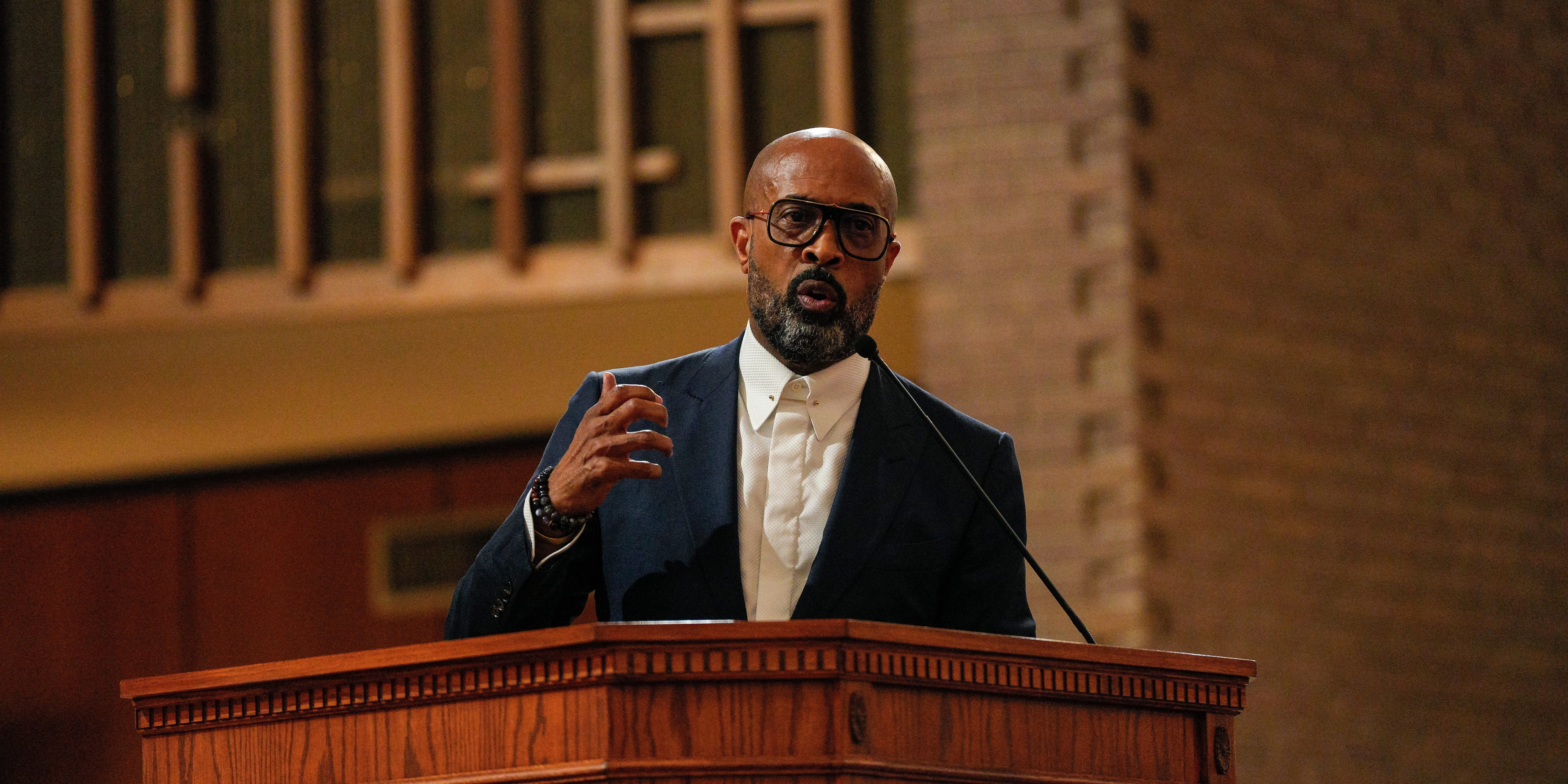
“Why do you wanna have a pep rally when people are hurting?”
That was the question Rev. Frederick Douglass Haynes III posed at a September food drive in South Dallas, where volunteers were collecting groceries for struggling families. Across town, Republicans were holding a midterm convention. Haynes, a longtime Baptist pastor and Democratic congressional nominee, was introducing James Talarico, the party’s candidate for U.S. Senate in Texas.
Visit extonnews.click for more information.
A month later, speaking at a Dallas megachurch, Talarico offered his own interpretation of Christian duty.
“I try to love my neighbor through public policy,” the Presbyterian seminarian told the congregation. “I’m trying to make my neighbor’s life easier, better, less stressful.”
Both men are making a deceptively simple argument in some of the staunchly staunch red-as-hell, Republican territory in America, one that might transcend the conventional wisdom about national campaigns and the millions poured into competing campaign war chests: When far-right policy translates into actual pain, at what point does intervening become a spiritual obligation?
Amid the big-ticket ad buys, fundraising appeals, and armies of political consultants, Talarico and Haynes are tapping into a political tradition that has long sustained communities across the South: showing up.
At Haynes’s Friendship-West Baptist Church, the ministry extends to legal services, immigration advocacy, counseling, economic justice, and food policy. It is an example of how churches often form the connective tissue of communities suffering under economic and political strain.
When far-right policy translates into actual pain, at what point does intervening become a spiritual obligation?
That strain is measurable. Texas is home to four of the nation’s 10 most financially distressed major cities, including Houston, which ranks second nationwide, according to a 2026 analysis. Feeding America estimates that nearly 1 in 5 Texans experienced food insecurity in 2024. Meanwhile, federal analysts project that changes to Medicaid eligibility enacted last year will increase the number of uninsured Americans by 7.5 million by 2034.
While Democratic Party leaders publicly debate how to punish Donald Trump politically, allege corruption, or navigate the ideological divide between moderates and democratic socialists, a different argument is emerging from Southern pulpits.
The Underground Church
From Quaker abolitionists to the Social Gospel’s challenge to industrial exploitation, progressive religious institutions have helped drive some of America’s most consequential political transformations. Christian farmworker ministries supported migrant laborers before joining the United Farm Workers’ California grape boycotts in the 1960s. And while Black churches overwhelmingly led, sustained, and suffered the brunt of violence in the fight for equal civil rights in this country, a handful of white denominations joined them.
Of course, churches also defended slavery, segregation, and exploitation. The blunt reality is that throughout American history, Christianity has always been political and has been used to justify a wide variety of competing political ends.
Related
Pete Hegseth’s Unholy War
But Republicans have deftly exploited the perception that they alone speak for American Christians. The Trump administration has readily embraced religious iconography, from evangelical leaders praying over the president in the Oval Office to Defense Secretary Pete Hegseth’s frequent invocations of the medieval Crusades.
There is no way around the fact that Republicans have built a formidable religious coalition, particularly among white evangelicals. Last year, the nonprofit, nonpartisan Public Religion Research Institute, or PRRI, found a majority of Republicans qualified as either Christian nationalist adherents or sympathizers in 2025, compared with 17 percent of Democrats.
But Republicans don’t have a monopoly on Christian voters. Pew Research Center polling this month found 73 percent of white evangelical Protestant registered voters preferred Republican House candidates, while 74 percent of Black Protestants and 59 percent of Hispanic Catholics preferred Democrats. None of that is particularly surprising on the surface.
Nor is this some newly discovered religious awakening. According to PRRI’s Census of American Religion, which was published in April, 57 percent of Democrats identified as Christian in 2025, a significant drop from 70 percent in 2013. The white Christian left isn’t necessarily growing, but it’s far from insignificant. Much of it has simply been politically overlooked.
It’s a perception the GOP has routinely capitalized on, often spending a great deal of their election campaigns attacking opponents on religious ground.
On Sunday, Texas Gov. Greg Abbott cravenly tarred his Democratic gubernatorial challenger, state Rep. Gina Hinojosa, as supporting “Sharia law,” citing an endorsement from a Muslim advocacy group’s political affiliate.
Perhaps ironically, Hinojosa is, and has been on the record, a Catholic — same as Abbott.
“My faith is my moral compass,” Hinojosa told the National Catholic Register in September. “It grounds me in purpose and gives me the courage to do what is right regardless of obstacles or consequences.”
Faith Without Works Is a Dead End
For those who have spent years watching their faith become synonymous with a politics they don’t recognize, frustration may finally be giving way to something else: a determination to be heard.
There are signs that this long-overlooked religious tradition is finding a more public voice. An August study by PRRI documented progressive Christians organizing against Christian nationalism in eight states, including Texas and Louisiana, channeling local meetings, religious discussions, and community networks into political action. Elsewhere, hundreds of members of the clergy have joined protests against immigration enforcement, and some have been trained in direct action and civil resistance. While the movement may not be growing in numbers, its willingness to challenge political power is increasingly visible.
Related
Apocalypse Now: Naomi Klein and Astra Taylor Investigate the End-Timers Alliance
As retired Texas Rev. Kathleene Card, who has thrown her support behind Talarico, told the Houston Chronicle, “faith should influence how people respond to poverty, human rights, the environment, and the well-being of their community.”
Whether any of this will translate into winning on Tuesday is still an open question. An October Fox News poll put Talarico and Republican Ken Paxton at 49 percent apiece among likely voters, but newer polls show Talarico with a small lead. Abbott led Hinojosa by 5 percentage points in that Fox poll, and most polls in the race show the governor with a slim lead.
No matter the result, the Texas campaigns offer a different, more nuanced way of understanding political persuasion. They also challenge a long-standing assumption among national Democrats: that their voters are a monolith, moved by the same issues, values, and appeals.
Across rural America and the South, voters may be growing weary of manufactured arguments and hypothetical doomsday prophecies, with research showing that political advertising, as it stands, has little effect on changing minds at all.
There is something to be said for people willing to put boots on the ground, to do the work instead of endlessly debating how to begin and whether it matters, in the name of service.
It’s a moral code not too dissimilar to a Western: When confronted with injustice, you stand for what’s right, even if you stand alone and are ridiculed for what you believe. It’s a mode of Christianity that harkens back to Abraham Lincoln (and maybe even John Brown.)
That might be a more enduring political proposition than many Democrats’ feigned, helpless aggrievance to the latest Republican spectacle. Campaigns come and go; so do their promises, if they existed in the first place. But the obligation to one’s neighbors remains.
The post The Rise of the Christian Left in Texas appeared first on The Intercept.