Justice Sanjay Kishan Kaul’s Memoir Flags Strains With Ex-CJI Chandrachud Over Collegium, Judicial Appointments
· Free Press Journal
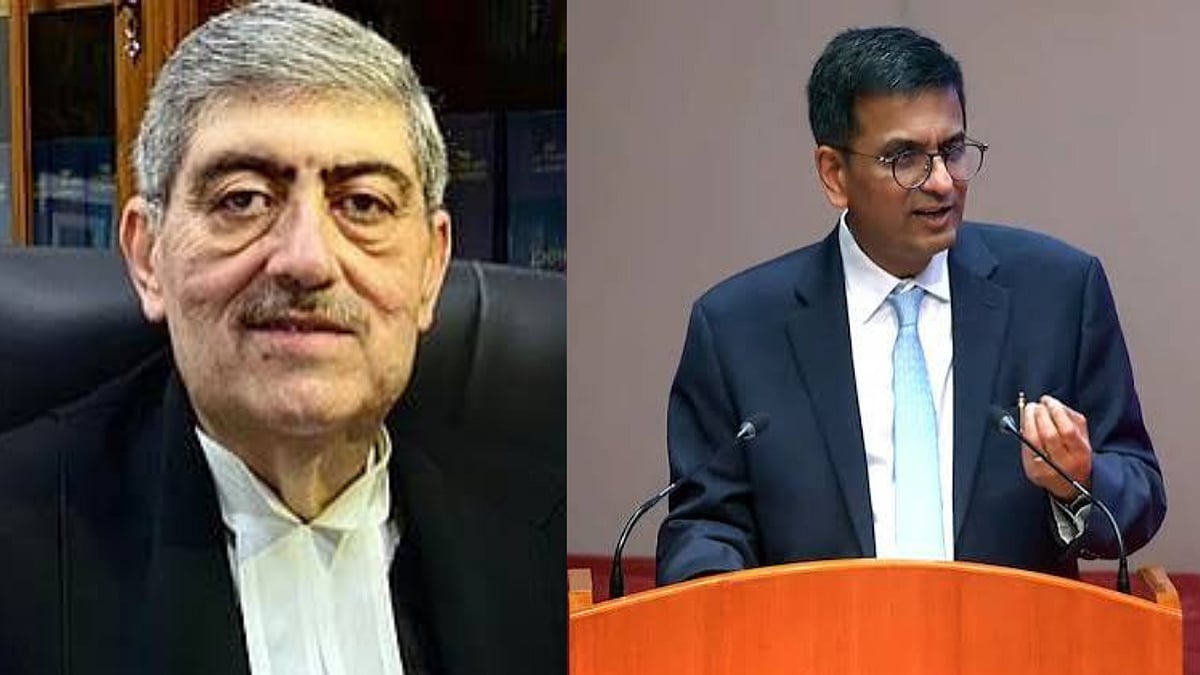
Former Supreme Court judge Justice Sanjay Kishan Kaul’s forthcoming memoir, Without Fear of Favour, examines the tensions within the judiciary over appointments, the Collegium system and the relationship between the judiciary and the executive. The book, scheduled to be published by Juggernaut later in October 2026, offers an account of Kaul’s judicial career and his concerns over institutional independence and transparency.
Visit likesport.biz for more information.
Based on a pre-publication manuscript reviewed by The Indian Express, the memoir contains critical observations about former Chief Justice of India (CJI) D.Y. Chandrachud’s approach to engaging with the government on judicial appointments. Kaul, who served as a Supreme Court judge from 2017 until his retirement in December 2023, was the senior-most puisne judge, or J1, for around 14 months.
Kaul Questions Chandrachud’s Approach To Government On Appointments
In the memoir, Kaul describes Chandrachud as being “too deferential” towards the government in matters concerning judicial appointments. He raises concerns about instances in which the government’s approval or views were allegedly sought before formal Collegium deliberations, arguing that such an approach risked allowing the executive to exercise influence over decisions that should be taken independently by the judiciary.
Kaul distinguishes between seeking the government’s views after the Collegium has reached a decision and obtaining what he perceives as “pre-approval” before deliberations. According to his account, the latter approach raises questions about the independence of the appointment process.
The memoir also recounts an incident in which Kaul walked out of a meeting following a disagreement involving a candidate from a minority faith and what he described as a “bizarre” caste-related query.
These accounts highlight the differences in approach between the two judges over how the judiciary should engage with the executive while safeguarding its institutional autonomy.
‘Judges With A Spine’: Kaul On Judicial Independence
Kaul argues that the government is more likely to respect judges who demonstrate firmness and independence, emphasising the need for the Supreme Court to function as an effective check on executive power.
The memoir cautions against the judiciary becoming either an instrument of the political opposition or an institution that accommodates the government excessively. Instead, Kaul advocates maintaining a balance that allows the court to scrutinise executive actions without compromising its constitutional responsibilities.
His reflections place judicial independence at the centre of the debate over the relationship between the judiciary and the government, particularly in matters involving appointments and institutional decision-making.
Kaul Questions Judiciary’s Decision To Strike Down NJAC
Kaul also revisits the Supreme Court’s 2015 judgment that struck down the National Judicial Appointments Commission (NJAC), which had been established to replace the Collegium system for appointing judges.
Reflecting on the decision, Kaul writes that the alternative system “should have been given a chance to work, rather than being rubbished immediately by the judiciary.”
The observation raises questions about whether the judiciary should have allowed the NJAC framework to operate before rejecting it. The judgment had reaffirmed the Collegium system, under which senior judges play a central role in recommending appointments to the higher judiciary.
Kaul’s comments also draw attention to the continuing debate over judicial appointments, the transparency of the existing system and the need to insulate the process from political influence.
Collegium System ‘Deeply Imperfect’, Says Former Judge
Beyond his differences with Chandrachud, Kaul raises concerns about the functioning of the Collegium system itself, describing it as “deeply imperfect” because of its opacity and vulnerability to informal pressures.
The memoir also touches upon issues surrounding the transfer of cases between benches, the designation of senior advocates and decisions that Kaul believes were delayed or withdrawn during his final months on the Supreme Court.
These reflections suggest that his concerns extend beyond individual disagreements to broader questions about accountability, consistency and transparency within the judiciary.
Kaul’s account also includes personal regrets about the closing months of his tenure, when certain matters were, in his view, pulled or delayed. His observations offer a retrospective assessment of the challenges facing the Supreme Court and the institutional processes that shape its functioning.
Chandrachud Responds To Kaul’s Account
Responding to the controversy surrounding the memoir, Chandrachud said he had not read the book. He recalled his interactions with Kaul in the Collegium as respectful and said he did not remember the incident in which Kaul reportedly walked out of a meeting.
Chandrachud also pointed out that the government has a legitimate role in the judicial appointment process, noting that warrants of appointment are issued by the President.
His response presents a contrasting account of the interactions between the two judges and the executive, underscoring the differences in their recollections and interpretations of the appointment process.
Kaul has also discussed aspects of the memoir in interviews, including a conversation with journalist Karan Thapar for The Wire.
Kaul’s Judicial Career And Institutional Legacy
Born on December 26, 1958, Kaul served as a judge of the Delhi High Court before becoming Chief Justice of the Punjab and Haryana High Court and subsequently the Madras High Court. He was appointed to the Supreme Court in 2017 and retired in December 2023.
During his judicial career, he was associated with several significant cases concerning free speech, privacy and constitutional questions, including matters involving artist M.F. Husain, writer Perumal Murugan and the abrogation of Article 370.
His memoir brings together reflections on his judicial experience and the institutional questions he believes remain unresolved, with particular emphasis on the balance of power between the judiciary and the executive.
Separate Book Traces Kaul Family’s Kashmiri Roots
Separately, Amongst the Chinars: The Kaul Family Legacy, written by theatre director and author Feisal Alkazi, was launched in Delhi in October 2026. The book was released by Dr Karan Singh at an event that included a conversation involving Kaul and Suhel Seth.
SC Appoints Ex-CJI DY Chandrachud As Mediator In Sunjay Kapur Estate Dispute For 'Amicable' SolutionUnlike Without Fear of Favour, the volume focuses on the history of the Kaul family, its Kashmiri roots and its connections with public service, administration and diplomacy. It traces the family’s legacy and Kaul’s journey across different cities.
The two books therefore explore different aspects of Kaul’s life: one examines his judicial career and institutional concerns, while the other places his personal journey within the broader history of his family.
With Without Fear of Favour, Kaul’s account adds to the ongoing debate over judicial appointments, the Collegium system and the constitutional relationship between the judiciary and the executive. The published memoir will provide the primary text against which its accounts and recollections can be assessed.