As Israeli election looms, Trump advisers see opportunity beyond Netanyahu
· Axios
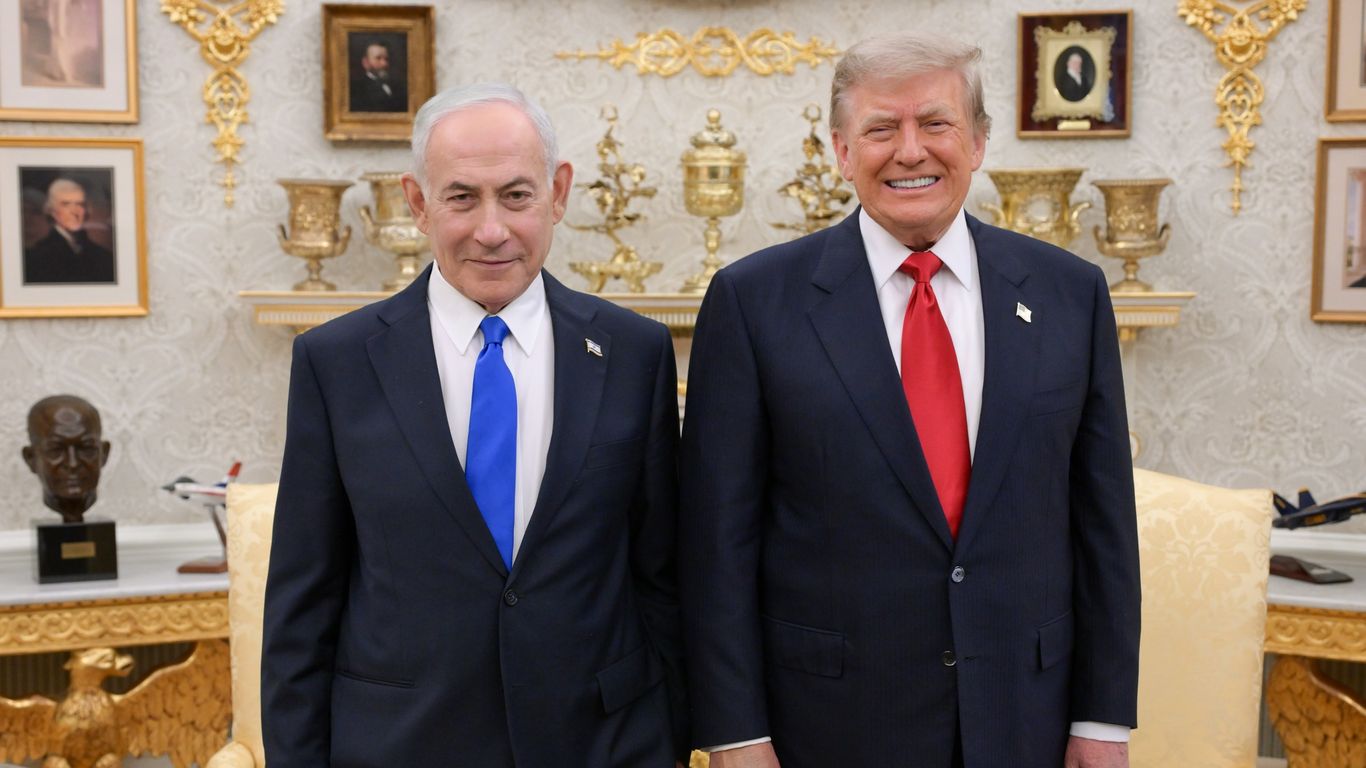
President Trump has endorsed Benjamin Netanyahu in Tuesday's Israeli election, but some of his advisers see opportunity for his Middle East agenda in a government led by someone else, U.S. officials tell Axios.
Why it matters: Trump has never worked with an Israeli prime minister other than Netanyahu, and doesn't personally know any of the other candidates. The two have forged a close but often turbulent relationship.
Visit extonnews.click for more information.
- "He's the devil he knows," one Trump adviser said, describing the president's view of Netanyahu.
Driving the news: After weeks of hesitation, Trump endorsed Netanyahu on Sunday — and even suggested his defeat would have consequences for U.S.-Israel relations. One U.S. official described the endorsement as a win-win for Trump, regardless of the outcome.
- If Netanyahu wins — or remains in power as caretaker prime minister — Trump could claim credit for rescuing him politically and use that leverage to press for concessions.
- If Netanyahu loses and his opponents form a government, Israel's new leaders would still have every incentive to cultivate good relations with Trump. His endorsement of their rival would quickly become a footnote.
Behind the scenes: Many of Trump's closest advisers opposed his decision to endorse Netanyahu, believing the president should stay out of the Israeli election, according to sources familiar with the discussions.
- Vice President Vance notably declined to follow Trump's lead when asked about the election this week, amid growing hostility toward Netanyahu in parts of the MAGA movement.
- "I'm not attacking Bibi Netanyahu. I'm not endorsing Bibi Netanyahu. I think the president's endorsement is ultimately what matters," Vance told reporters.
Zoom in: Vance, who endorsed former Hungarian Prime Minister Viktor Orbán days before his election defeat in April, said he would no longer get involved in foreign elections.
- The vice president is among the senior Trump officials who became disillusioned with Netanyahu during the war with Iran, according to sources familiar with their thinking.
- Vance and other top aides believe Netanyahu's pre-war assessments to the White House were mistaken, deepening questions about whether he remains the best partner for achieving Trump's regional ambitions.
The big picture: Once the Israeli election and U.S. midterms are over, Trump will face a defining choice for his Middle East agenda: whether to join Netanyahu in another major military operation against Iran.
- Netanyahu is eager to move forward. But the election results could influence Trump's decision, or at least the timing of any renewed large-scale fighting.
- Trump also wants to move beyond the Iran war and pursue an ambitious diplomatic agenda that includes implementing his Gaza peace plan, brokering deals between Israel and Lebanon and Syria, and ultimately securing a historic Israeli-Saudi peace agreement.
- Whether Trump can make progress on those goals will depend in part on who governs Israel — and what kind of coalition emerges from Tuesday's vote.
The intrigue: Behind the scenes over the last six months, several of Trump's top advisers have grown dissatisfied with Netanyahu on key regional priorities.
- Gaza: Trump's envoys Steve Witkoff and Jared Kushner have expressed frustration with Netanyahu's reluctance to advance implementation of the president's peace plan.
- Syria: Trump's envoy Tom Barrack has similar concerns about the Netanyahu government's approach to Damascus and continued Israeli military operations in Syria.
- Lebanon and the West Bank: Secretary of State Marco Rubio and his team have a better relationship with Netanyahu, but believe Israel could do more to strengthen Lebanon's government. They are also frustrated by Netanyahu's failure to do more to curb settler attacks on Palestinians in the West Bank.
Between the lines: Some U.S. officials say a new Israeli government without Netanyahu's far-right coalition partners could be easier to work with.
- White House deputy press secretary Anna Kelly declined to comment, referring Axios to Trump's endorsement of Netanyahu on Truth Social.
State of play: Three major Israeli television networks released their final pre-election polls Friday, all showing Netanyahu's coalition falling well short of a parliamentary majority.
- All three projected just 50 seats for Netanyahu's bloc in the 120-member Knesset — 17 fewer than his current coalition holds. His Likud party, which currently holds 32 seats, was projected to win just 20.
- The polls gave former military chief Gadi Eisenkot's opposition bloc between 52 and 56 seats, with another 14 to 16 going to two Arab Israeli parties. Channel 11 also projected four seats for a reservists party unaffiliated with either bloc.
- Pro-Netanyahu Channel 14 was the major outlier, projecting 60 seats for his bloc and 30 for Likud in a poll earlier this week.
What to watch: The polls point to a potential political deadlock: Neither Netanyahu nor Eisenkot appears to have a clear path to the 61 seats needed to form a government.
- Eisenkot would need to bring Arab Israeli parties into his coalition, which he has ruled out, or form a minority government with their outside support — an arrangement some of his potential partners oppose.
- A unity government between Netanyahu and his rivals is considered highly unlikely.
- If neither side can assemble a governing majority, Israel could face another election, with Netanyahu remaining in power as caretaker prime minister.
The bottom line: Rather than ushering in a new government more receptive to Trump's agenda, Tuesday's election could leave the president dealing with a weakened Netanyahu and an Israeli political system consumed by another prolonged crisis.