Resident Evil Review: Zach Cregger Serves Up Fear, Flesh & A Very Bad Delivery
· Free Press Journal
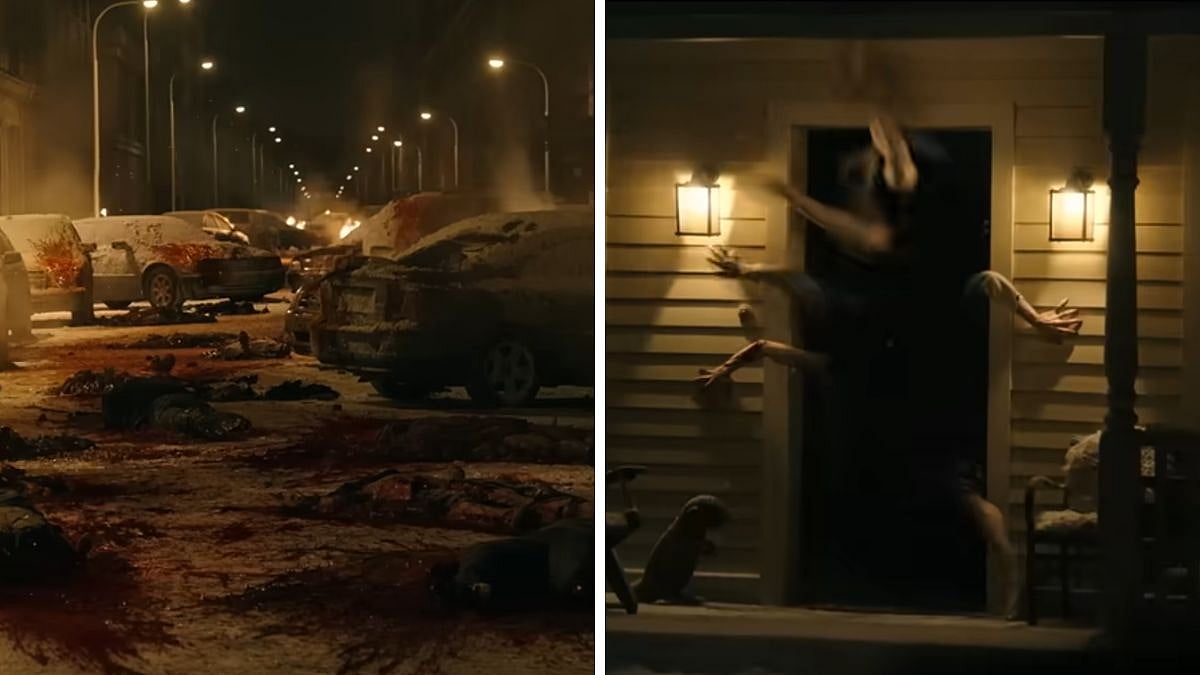
Director: Zach Cregger
Cast: Austin Abrams, Zach Cherry, kali Reis, Johnno Wilson, Paul Walter Hauser
Where: In Theatres
Rating: 2.5
Visit moryak.biz for more information.
Review
A medical courier, a frozen road and a package nobody should open. That is how Zach Cregger’s Resident Evil begins, and things deteriorate from there with admirable efficiency. Bryan is not the usual video game hero with heroic cheekbones and unlimited ammunition. He is an ordinary, slightly hapless man who finds himself stumbling into the Umbrella Corporation’s biological nightmare, armed mostly with panic, improvisation and the understandable desire to survive the night.
Cregger wisely treats the franchise less as sacred video game scripture and more as a playground for horror, black comedy and escalating bad decisions. The humour is often wickedly timed, particularly because the film refuses to signal whether a tense moment is about to produce a scream or a laugh. The result is a pleasingly unstable tone.
The weakness is structural. Bryan’s journey becomes a succession of increasingly grotesque encounters, with each new location producing another mutation before the film moves briskly towards its inevitable destination. The energy rarely flags, but the storytelling sometimes feels like a particularly murderous checklist. The film’s emotional subplot involving Bryan and his girlfriend also struggles to justify its place amid the mayhem.
Actors’ Performance
Austin Abrams carries the film with considerable charm. Bryan’s terror is never played as heroic stoicism, and Abrams understands that his character’s instinctive disbelief is often funnier than any scripted gag. His performance gives an otherwise simple survival narrative a human centre.
The supporting cast is less fortunate. Paul Walter Hauser gets some mileage from his corporate villainy, while the remaining players largely function as brief companions, obstacles or exposition dispensers. The film belongs to Abrams, and the screenplay knows it.
Music and Aesthetics
The creatures are the real supporting cast, and they have considerably more personality than several humans. The effects department keeps inventing increasingly unpleasant ways for the infected to stop looking remotely human, giving the film a wonderfully squirm-inducing visual vocabulary.
Dariusz Wolski’s cinematography also borrows intelligently from the games, placing us close to Bryan’s perspective and making darkness, confined spaces and uncertain corners part of the suspense. The Holladays’ score moves neatly between sinister atmosphere and energetic action, while the sound design makes even snow underfoot feel ominous.
Final Verdict
Overall, the film understands that horror need not behave itself, and that is its greatest virtue. Beneath the technical polish and creature ingenuity lies a story whose broad contours are familiar. It is an entertaining nightmare, certainly, but not an especially haunting one.