With Iran, Trump Says Fighting Is Off and Talks Are On—For Now, Again
· Time
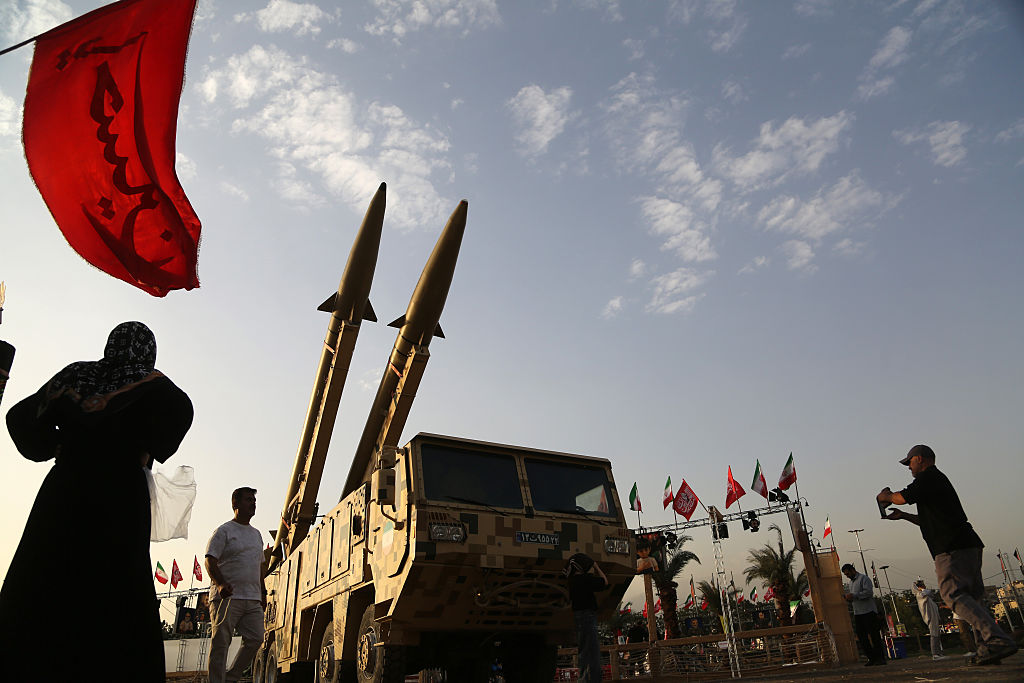
U.S.-Iran talks are back on, President Donald Trump said after calling off major planned strikes.
In a late Saturday post on Truth Social, Trump said he had agreed to requests by Iran and other Middle Eastern countries to “hold off any attack in that the perimeters of a deal has been agreed to.” The framework agreement, Trump said, “would include the Immediate, Complete, and Total OPENING OF THE HORMUZ STRAIT, and an end to Iran’s nuclear threat.”
Visit somethingsdifferent.biz for more information.
“Based on this request, I have agreed, for the future benefit of the WORLD and, likewise, the survival of a successful and prosperous Iran, to cancel the attack, subject to being able to rapidly make a DEAL,” Trump said. “Get to work, everybody, and get it DONE.”
He added that Israel also agreed to join the U.S. “in this commitment.” Israel has not publicly announced a commitment to suspend attacks on Iran.
The U.S. President told reporters on Sunday that a new round of talks would begin on Monday afternoon but did not provide further details about the negotiations or a deadline for a deal.
But it’s far from the first time that the U.S. and Iran have agreed to pause attacks or signaled diplomatic progress, only to backtrack days later.
Trump has reportedly contemplated relaunching major operations in Iran and the U.S. has carried out weeks of strikes against Iran in an attempt to reopen the Strait, which Iran militarized in early March. In his Saturday post, Trump also warned that the U.S. “is locked and loaded and ready to go” against Iran “at levels of Military Terror, Strength, and Power not seen since World War II.”
Still, the President’s back may be up against the wall as the war, now in its sixth month, remains unpopular with Americans facing rising prices of gas and other goods. Months of attacks have also depleted the Pentagon’s stockpile of key munitions, and the widening conflict has entangled more countries in the Middle East, which could push the human and economic cost of the war even higher.
On again, off again
Since the U.S. and Israel launched the war against Iran on Feb. 28, the countries have paused and resumed fighting multiple times. The joint U.S.-Israeli strikes collapsed ongoing nuclear talks between the U.S. and Iran, and analysts previously told TIME that the attacks likely hardened Iran’s position towards negotiating with the U.S. Iran has consistently denied seeking a nuclear weapon.
On March 9, Trump said the war was “very complete, pretty much” and claimed that Iran’s military had been destroyed. Yet, fighting continued, and six days later Trump called on NATO allies and China to help reopen the Strait.
Late in March, with global energy prices soaring as Iran targeted Gulf refineries and ships crossing the Strait of Hormuz, Washington and Tehran began to exchange cease-fire proposals via Pakistan and other mediators. The two countries agreed to a two-week Pakistani-mediated cease-fire that began on April 8. The cease-fire suspended most of the intense fighting, but low-level exchanges especially around the Strait of Hormuz continued.
Israel also escalated its attacks on Lebanon, which Iran said was a cease-fire violation. Iran has repeatedly insisted that any cease-fire must include Lebanon, and analysts have said that Israel’s continued attacks—even after Trump later pressed Netanyahu to stop—could upend any U.S.-Iran deal.
Trump announced on April 21 that the cease-fire was extended indefinitely, even as the Strait remained closed, the U.S. continued to blockade Iranian ports, and clashes continued around the Strait. The U.S. insisted the cease-fire was still on and suspended its large-scale aerial campaign.
On May 1, Trump informed Congress that hostilities with Iran “have terminated,” arguing that the War Powers Resolution’s deadline for congressional authorization no longer applied. A week later, U.S. and Iranian forces exchanged fire around the Strait, with U.S. forces disabling two Iranian tankers. Later that month, Trump said he cancelled a planned attack because “serious negotiations” were underway. U.S. strikes resumed by the end of May after negotiations faltered.
Hours after threatening to hit Iran “VERY HARD,” Trump announced a negotiating “breakthrough.” On June 17, the U.S. and Iran signed a 14-point memorandum of understanding that halted military operations, ended the U.S. blockade, and reopened the Strait of Hormuz. The two parties began talks towards a fleshed out agreement to end the war that weekend in Switzerland.
But the issue of the Strait of Hormuz remained unresolved, and in late June, days after the MOU was signed, U.S. officials said Iran struck a commercial ship in the Strait. The U.S. retaliated with strikes on Iran and officials said Iran attacked another tanker. The U.N. maritime agency paused its escort mission for ships stranded in the Strait, as the renewed violence heightened uncertainty around when global energy prices might stabilize.
The U.S. and Iran held indirect talks with mediators in Doha beginning June 30. While Qatar and Pakistan announced “positive progress,” the next round of talks did not proceed as envisaged. In the midst of a weeklong funeral processions for Iran’s slain Supreme Leader Ayatollah Ali Khamenei, in which officials and people called for his death to be avenged, three commercial ships were attacked. The U.S. retaliated against the suspected Iranian attacks with strikes on Iran on July 7.
On July 8, Trump declared the cease-fire “over.” The U.S. resumed its aerial campaign on Iran, including nearly two weeks of consecutive strikes, while Iran retaliated with missile and drone attacks against countries with U.S. bases.
Over the weekend of July 25, the U.S. and Iran paused fighting. Trump said he ordered U.S. forces to hold fire at the request of mediators, and Iran said it would halt its attacks for as long as the U.S. held off on strikes.
But again the pause was short-lived.
On July 28, Iran launched missiles at U.S. forces in Jordan. At the same time, Houthi rebels in Yemen attacked several Saudi vessels in the Red Sea, threatening to disrupt another maritime chokepoint.
Fears spread of a widening war as more countries appeared to be getting involved. On Wednesday, U.S. and Saudi forces struck Iran-linked militias in Iraq, as Saudi Arabia accused them of launching drones at its oil facilities. And two gas vessels, including a U.S.-owned floating storage facility, at a Mediterranean port in Egypt caught fire in what appeared to be the first attack on Egyptian territory during the war.
Where things stand now
Trump’s announcement comes after he has publicly and privately mused about resuming full-scale operations against Iran. Last week, Trump reportedly ditched plans to escalate the U.S. military campaign after advisers cautioned that such an offensive could put the Pentagon’s munitions stockpile at dangerous levels. Still, at least publicly, Trump continued to threaten more attacks on Iran. On Friday, the President said U.S. forces “will be hitting them very hard, and you know at some point, they’re going to say, ‘We just can’t take it anymore.’”
It appeared that the U.S. was planning a major attack. On Saturday, the State Department issued new security alerts over the potential risk of escalation, and U.S. embassies in Jordan, Iraq, and Israel advised heightened caution.
Later that day, Trump said he had called off the attack at Iran’s request.
But Iran disputed Trump’s rationale for calling off the attack. Instead, Iranian officials suggested that the threat of further disruptions to global markets, including if Iran’s proxies escalated attacks in other shipping routes, forced Trump to back down.
Iran’s Mehr news agency rejected Trump’s claim that Iran had requested the pause. The country’s Acting Defense Minister Majid Ebn-e-Reza said Trump retreated “within the context of psychological operations and a war of calculations,” and that Iran was “will neither be taken by surprise nor will we be passive” after the announcement. Iran acknowledged ongoing mediation efforts but has not publicly confirmed Trump’s claim that talks would begin Monday.
Iranian media reported that Iran and Oman were in the final stages of negotiating an agreement over the Strait of Hormuz. The U.S.-Iran MOU had stated that the Strait should be open but left the details of its management to discussions between Iran and Oman. Iranian Foreign Ministry spokesperson Esmaeil Baghaei told Iranian state TV that the talks are centered on a new route through the Strait “that respects the sovereign rights of both sides,” but that it “will in no way return to the status it was before” the war began.
Israel’s position in the U.S.-Iran talks is also unclear. Trump met with Netanyahu in Washington last week and discussed the possibility of using diplomacy, economic pressure, and force to curb Iran’s nuclear program, an Israeli official told Reuters. Analysts previously told TIME that Iran would have little incentive to accept an agreement without sufficient guarantees against an Israeli attack.
“With or without an agreement, and regardless of any external commitments,” Israeli Energy Minister Eli Cohen told Reuters, “if Iran attempts to renew its nuclear program or advance its ballistic missile industries, we will be there. We will take action, and we will strike.”