Trump asked Muslim leaders to sign peace deal with Israel after Iran war ends
· Axios
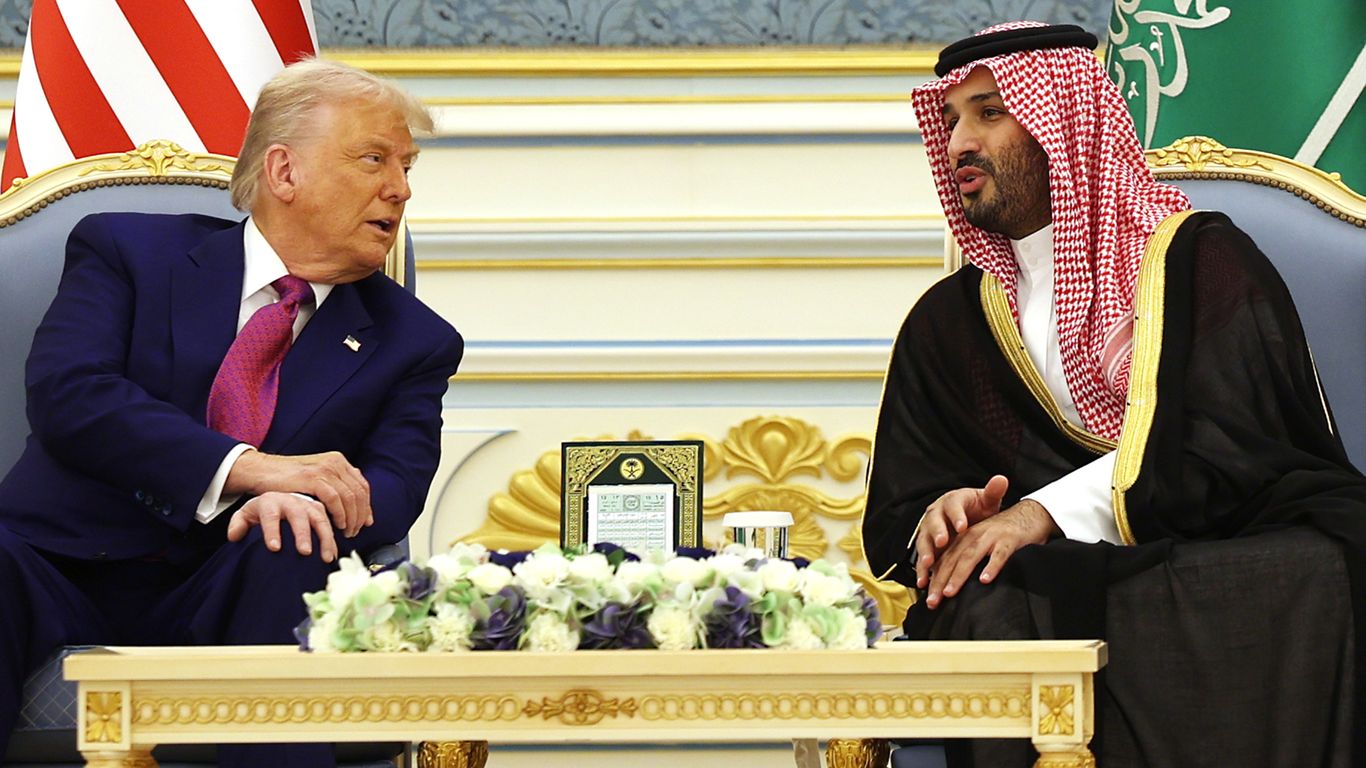
President Trump told leaders of several Arab and other Muslim countries during a Saturday conference call that if a deal to end the Iran war is achieved he wants their nations to sign peace agreements with Israel, per two U.S. officials with direct knowledge of the call.
Visit freshyourfeel.com for more information.
Why it matters: Trump's remarks on Israel and the countries signing onto the Abraham Accords during the call signal the next big step he wants to take in the Middle East after the war.
- Trump is aiming mostly at a historic Saudi-Israeli peace agreement, but the current political climate in the region and the upcoming Israeli election make any near term breakthrough extremely difficult.
Driving the news: On Saturday, Trump held a phone call with the leaders of Saudi Arabia, the United Arab Emirates, Qatar, Pakistan, Turkey, Egypt, Jordan and Bahrain to discuss the emerging deal with Iran.
- Leaders including UAE President Mohammed bin Zayed, who has had a more hawkish view on the Iran war, said they support it.
- "They all said we are with you on this deal. And if it doesn't work we will be with you too," a U.S. official said.
Behind the scenes: A U.S. official with knowledge of the conversation said Trump told the leaders that he would call Israeli Prime Minister Netanyahu next and stressed that he hoped that in the near future Israel's leader would be on the same call.
- Trump told the leaders that after the war with Iran ends he expects all of them who are still not part of the Abraham Accords or don't have peace agreements with Israel to join and normalize relations with the Jewish state, two U.S. officials said.
- The leaders, especially those of Saudi Arabia, Qatar, and Pakistan who don't have formal diplomatic relations with Israel, were surprised by Trump's request. "There was silence on the line and Trump joked and asked if they are still there," one of the U.S. officials said.
- Trump then told the leaders that his envoys Jared Kushner and Steve Witkoff will follow up on this issue in the coming weeks.
What they are saying: "I would like to thank, thus far, all of the countries of the Middle East for their support and cooperation, which will be further enhanced and strengthened by their joining the Nations of the historic Abraham Accords," Trump wrote in a post on Truth Social on Sunday.
- He floated the idea of Iran joining the Abraham Accords one day. It would require Tehran to recognize Israel, something it has refused to do for decades. The current Iranian regime sees Israel as an enemy and is committed to its destruction.
- Senator Lindsey Graham (R-S.C.) who criticized the emerging deal with Iran and is a leading force in Congress for the expansion of the Abraham Accords wrote on X on Sunday that he supports Trump's request to the Arab and other Muslim leaders.
- "If in fact as a result of these negotiations to end the Iranian conflict, our Arab and Muslim allies in the region agreed to join the Abraham Accords, it would make this agreement one of the most consequential in the history of the Middle East," he said.
- Graham called on Saudi Arabia and other countries to adhere to Trump's request. "If you refuse to go down this path as suggested by President Trump, it will have severe repercussions for our future relationships and make this peace proposal unacceptable. Further, it would be seen by history as a major miscalculation," he wrote.
Yes, but: Saudi Arabia's Crown Prince Mohammed Bin Salman had expressed willingness to normalize relations with Israel, but over the past year he has cooled down on this issue.
- Trump asked Bin Salman to join the Abraham Accords during their Oval Office meeting last November. The Saudi crown prince pushed back and the meeting got tense.
- The Iran war and Saudi Arabia's rift with the UAE have pushed the Kingdom to take a more skeptical and tough position towards Israel's far-right government.
- Saudi officials still demand that Israel commits to an irreversible and time-bound path for a Palestinian state as a condition for them normalizing relations. The Israeli government refuses this.
- Israeli and U.S. officials think Riyadh will not take any steps on this issue ahead of Israel's elections planned for September and before it sees which government is sworn in.