From Red Carpets To Runways: How Indian Couture Is Taking Over Global Fashion
· Free Press Journal
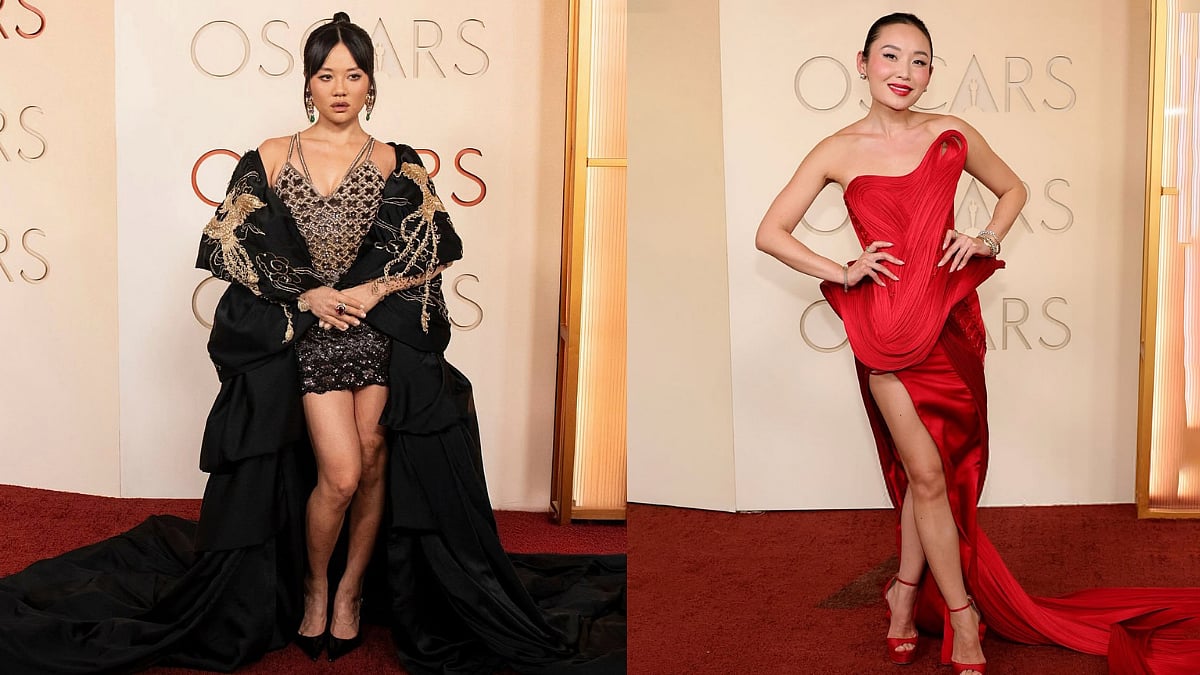
At the 98th Academy Awards, Sinners star Li Jun Li wore a couture creation by Gaurav Gupta. Demon Hunter fame Rei Ami chose Rahul Mishra couture, while Rachel McAdams donned earrings by Sabyasachi High Jewellery. Last year, for her performance at Saadiyat Nights in Abu Dhabi, Jennifer Lopez stepped out in a custom bedazzled pantsuit by Anamika Khanna. In line with her Cowboy Carter tour aesthetic, Beyoncé wore sequinned chaps crafted by Manish Malhotra. A Gucci saree on the Cannes red carpet worn by Alia Bhatt.
These are not isolated fashion moments. It’s a visible tipping point in a long, layered evolution - one that has taken years to crystallise. And it’s no longer limited to wearable couture alone. The takeaway is hard to miss: global fashion’s interest in India is accelerating. Driven in part by major luxury houses and Indian designers, these moments are bringing Indian craft and cultural codes to the forefront, with momentum that shows no signs of slowing down.
Visit afnews.co.za for more information.
Symbol to statement
There has been a fundamental shift in the global fashion ecosystem - one that has moved Indian couture from the margins to the centre of power dressing. “Indian couture has a heritage quality to it while still being of the moment. The detailing and artistry are timeless, and it resonates,” says Amrish Kumar, MD and Creative Director at Ritu Kumar. “The growing interest in India’s emergence, alongside the finesse of its craftsmanship, is what’s driving this shift.”
But India has never truly been absent from fashion’s narrative - only under-acknowledged. Its craftsmanship has long existed behind the scenes, often without due credit. “We’ve moved far beyond where we started decades ago. India is no longer seen as a backbencher or confined to outdated labels. India has always been synonymous with grandeur. If you look at our palaces, forts, and jewellery, everything reflects a larger-than-life sensibility rooted in opulence. That same spirit naturally carries into our fashion,” says designer Pallavi Mohan of her label Not So Serious.
Much of the embroidery seen at Paris Couture Week - across houses like Chanel, Dior and Alexander McQueen - is, in fact, created by Indian artisans. Among these, Dior has taken a more visible lead through its long-standing association with the Chanakya School of Craft in Mumbai. There was a snakes-and-ladders set at Louis Vuitton’s Spring/Summer 2026 menswear show. The partnership has not only brought Indian craftsmanship into sharper global focus but has also shaped some of the house’s most memorable, craft-led moments - including its landmark 2023 show at the Gateway of India.
“India has long been the backbone of global fashion, where so much is designed, developed, and produced for international brands. We live and work closely with artisans, which gives us an unmatched creative freedom. As designers and curators, we embrace intricate handwork, deep attention to detail, and a sense of drama in our creations,” she adds.
However, what often gets overlooked in global conversations around Indian fashion is the sheer depth of labour behind it. Beyond the visual richness, every garment carries an ecosystem of skill - hours of handwork, generations of knowledge, and a level of precision. “Understanding this depth adds a new level of appreciation for what we create,” Amrish shares.
What may appear as embellishment is, in reality, a time-intensive process that can take weeks or even months to complete, often involving multiple hands working in tandem. In an industry that increasingly prioritises speed and output, this kind of making exists on an entirely different timeline.
At the same time, Mariyam Khatri, founder and creative director of Banana Labs, points out that Indian fashion cannot be boxed into dated stereotypes. “It’s not just colourful prints, animal motifs, or traditional Indian wear,” she says. “We’ve evolved, and we’re continuing to evolve into a design-led fashion country.” What makes this evolution distinctive, however, is that it hasn’t come at the cost of craft. “Craft remains at the heart of India. The level of skill our artisans bring is unmatched, and that’s what truly sets Indian fashion apart on the global stage.”
Global red carpet
Beyond craft and couture, the growing global visibility of Indian fashion is also being shaped by the cultural capital of its celebrities. Indian actors and artists are no longer peripheral figures; they are fronting some of the world’s biggest luxury houses. Deepika Padukone with Louis Vuitton, Priyanka Chopra with Bvlgari, and most recently Ananya Panday with Chanel reflect a broader shift in who global luxury chooses to represent its image.
At last year’s Met Gala, the presence of Shah Rukh Khan and Diljit Dosanjh signalled more than star power. Dosanjh’s milestone as the first Punjabi artist to perform at Coachella in 2023 only underscores this trajectory. This year, Chanel appointed Bhavitha Mandava as house ambassador, after the NYU graduate made history as the first Indian model to open a Chanel show. She also made history as the first Indian model to appear solo on the cover of British Vogue.
Another key force behind this shift has been the growing influence of global stylists, who are increasingly looking beyond traditional fashion capitals for fresh, high-impact options. Indian designers bring strong silhouettes, intricate surface work, and a distinct visual identity that cuts through the sameness of conventional couture. “Stylists tend to be the discovery mechanism. They are critical to the process of identifying the overall narrative of the celebrity's appearance. This, coupled with the efforts made in PR and placement, has resulted in global celebrity placements,” Amrish highlights.
Additionally, social media has also accelerated this exchange, allowing stylists to discover collections in real time, engage directly with designers, and access a wider, more diverse pool of talent than ever before. “It has significantly strengthened storytelling, making it easier for global audiences to see and understand the work coming out of India,” Pallavi adds.
Here, there, everywhere
Indian designers are rapidly extending their footprint beyond the region. Couturiers like Rahul Mishra and Gaurav Gupta are now fixtures on the official haute couture calendar in Paris, while younger names like Dhruv Kapoor are showcasing in Milan. Meanwhile, veterans such as Manish Malhotra are entering new markets with their first international flagship in Dubai. Sabyasachi Mukherjee, whose maximalist aesthetic has struck a chord worldwide, has not only launched a flagship in New York but also previously collaborated with Christian Louboutin on a limited-edition capsule.
“Indian designers are now taken far more seriously - not just as small, local businesses, but as strong, competitive brands,” Pallavi says. The reasons behind this shift are, in many ways, structural. “One major factor is the increased availability of funding - many designers and brands are now backed by large corporate houses. This financial support allows them to present themselves on a much grander scale than before.”
Corporate backing has also played a pivotal role in reshaping the scale and reach of Indian fashion. Aditya Birla Fashion and Retail Limited has emerged as one of the most active investors in the space, taking a significant stake in Sabyasachi Mukherjee’s label and partnering with Tarun Tahiliani to launch Tasva, a couture-led menswear brand.
Lakmé Fashion Week Kicks Off In Style! Ace Indian Designers Anamika Khanna, Manish Malhotra & Rahul Mishra Set To Take Over Mumbai RunwayMeanwhile, Reliance Brands Limited has steadily built a formidable designer portfolio. It has backed Manish Malhotra and entered a joint venture with Rahul Mishra to support his global expansion. Through its retail arm, the group has also partnered with Anamika Khanna in a similar venture to scale her ready-to-wear label AK-OK, and acquired a majority stake in the legacy brand founded by Ritu Kumar.
Taken together - greater funding, increased visibility, and evolving global mindsets - it becomes clear why Indian fashion is steadily cementing its place on the world stage. “This is definitely a long-term shift. It may feel like a moment right now, but in reality, it’s long overdue recognition. Indian fashion has been building toward this for years, and it’s here to stay,” says Khatri.